BMW E46 Interior Trim Guide: Wood, Aluminum or Carbon?
The BMW E46 (1998–2006) came with one of the best interiors of its era — but after 20+ years, the decorative trim is usually the first thing that shows age. Peeling film, bubbled veneer, scratched aluminum. The good news: a full trim swap is one of the cheapest ways to make an E46 feel like a different car. This guide covers every factory finish, what goes wrong with each, and how replacement works.
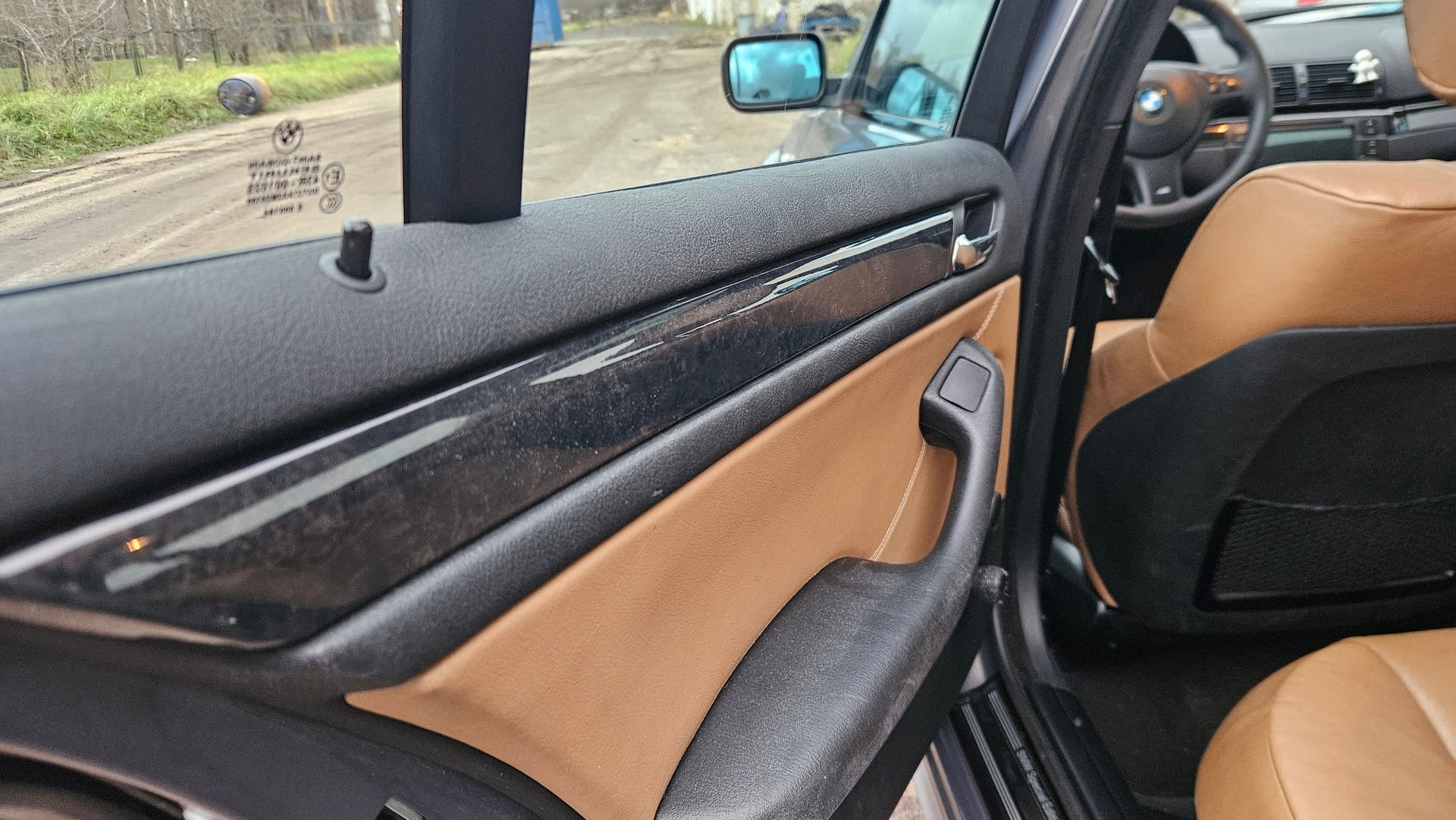
Factory trim finishes
BMW offered the E46 with several decorative finishes. A complete set typically includes the dashboard strip, four door card inserts (two on coupes), the center console surround, and sometimes the handbrake handle and shift surround:
- Wood — several veneers (myrtle, burr walnut, poplar). The classic choice, especially with tan or grey leather. Looks rich when the lacquer is intact, terrible when it bubbles.
- Brushed aluminum — the sporty OEM option. Durable, but scratches show and the anodized coating can wear at the edges.
- Aluminum "Black Cube" — dark geometric pattern, rarer, very resistant to visible wear. Popular on M Sport cars.
- "Titan Line" — titanium-look trim borrowed from the E39 parts bin. A common retrofit because it matches the instrument rings.
- Carbon-look film — usually not factory: most "carbon" E46 trim you see is a film applied over standard trim, and it is the finish that fails first.
The peeling-film problem
The single most common E46 trim issue is delamination: the decorative film or lacquer separates from the plastic base, usually starting on the door pulls and the console lid where hands touch most. Owners routinely report film "bubbling" or literally peeling off in sheets.
You have three options, cheapest first:
- Strip and paint. Remove the loose coating, sand with 800-grit, and paint the base plastic. Works, looks decent, but it is a weekend of work per set and the result is paint, not a factory finish.
- Wrap or re-veneer. Better-looking, more expensive, still not OEM.
- Replace with a used OEM set. Usually the best value: a complete take-out set in good condition costs less than professional re-veneering, installs in an afternoon, and keeps the car original.
What a trim swap actually involves
Most pieces are easier than people expect:
- Door inserts — pop off with a plastic pry tool after removing the door card (a handful of Torx screws and clips).
- Dashboard strip — the passenger-side strip pries out; around the vents, take your time with the clips.
- Center console — the surround lifts after the shift boot and console lid come out.
- Handbrake handle — the one piece that scares people: on many E46/E39 the handle is not sold separately, so replacing it means the whole handbrake mechanism and a full console teardown (some owners even pull the driver's seat for room). Budget an extra hour for this one piece, or buy a set that includes a handle in good shape.
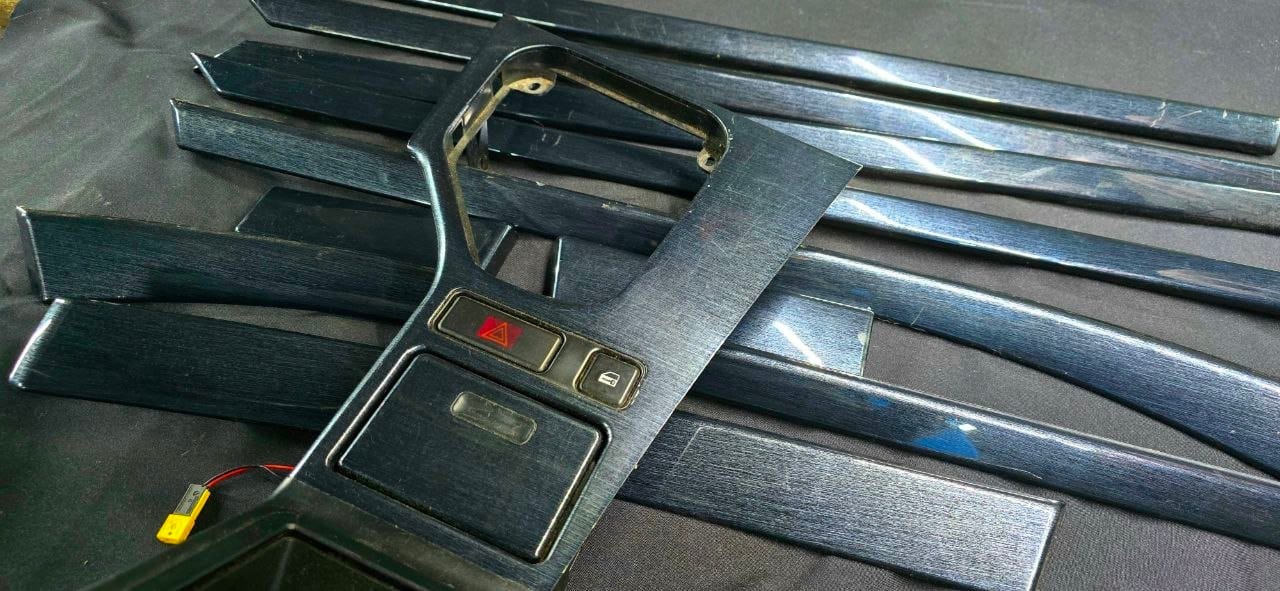
Which finish should you choose?
- Keeping the car classic? Wood — it is what most E46s left the factory with, and good veneer sets are the easiest to find.
- Sportier look? Brushed aluminum or Black Cube — more forgiving of daily wear and matches M Sport interiors.
- Tired of the film look? Any OEM solid finish over another wrap. Carbon film on a 20-year-old car almost always looks tired within a few years.
Whichever you pick, buy a complete set from one car — mixing pieces from different sets often shows shade differences, especially in wood.
E46 trim sets in stock
We regularly have complete OEM trim sets for the E46 — wood, black and aluminum — inspected at the edges and corners before listing. Shipping from Europe to the USA.
Browse the catalog